
1: Введение – Повышение комфорта и удобства с помощью автомобильных подлокотников Важность комфорта в современном вождении В современном автомобильном мире...
ЧИТАТЬ ДАЛЬШЕ
Цзянсу Dingkong Electronic Technology Co., Ltd.
Jun 23, 2026
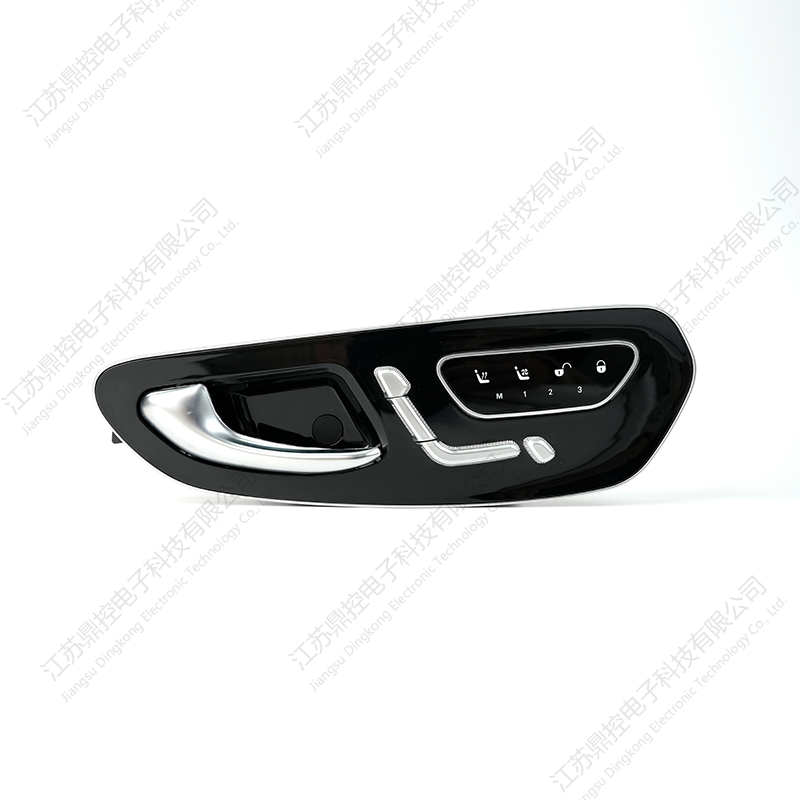
Automobile control switches serve as the primary physical interface between the driver and the vehicle’s electronic systems, translating mechanical input into electrical signals that manage everything from lighting to powertrain functions. A high-quality switch must deliver consistent tactile feedback and reliable electrical contact over a lifespan of 100,000 to 500,000 cycles. Failure in these components can lead to intermittent system faults, safety hazards, and significant user frustration, making their design and maintenance a critical aspect of automotive engineering.
Modern vehicles contain between 50 and 150 individual switches, ranging from simple momentary push-buttons to complex multi-axis joystick controllers for infotainment. The shift towards drive-by-wire technologies has increased the reliance on these electronic inputs, eliminating mechanical linkages and placing the entire burden of command execution on the switch’s signal integrity. Understanding the underlying technology helps in diagnosing issues and selecting durable replacements.
Not all automobile control switches use the same internal mechanism. The choice of technology depends on the required durability, cost, and haptic feedback. The three most common types found in modern vehicles are:
| Technology | Mechanism | Durability (Cycles) | Primary Application |
|---|---|---|---|
| Mechanical Contact | Metal-on-metal closure | 50,000 – 100,000 | Headlights, wipers, low-cost interior buttons |
| Membrane/Rubber Dome | Conductive rubber presses PCB traces | 100,000 – 300,000 | Climate control, radio presets, dashboard menus |
| Capacitive/Hall Effect | Non-contact magnetic or field change | 500,000+ | Start/stop buttons, gear selectors, premium interfaces |
Tactile confirmation is vital for driver safety. A switch must provide a distinct "click" or resistance change to confirm activation without requiring the driver to look away from the road. Mechanical switches offer natural feedback, while capacitive switches often require integrated vibrational motors or auditory cues to simulate this sensation. Poorly designed haptics can lead to input errors and increased cognitive load during driving.
Automobile control switches fail due to environmental stress, mechanical wear, or electrical degradation. Identifying the specific failure mode is essential for effective repair.
Diagnosis often involves using a multimeter to check for continuity across switch terminals while actuating the button. For complex multiplexed switches, scanning tool data streams can reveal if the Body Control Module (BCM) is receiving the correct signal voltage.
Extending the life of automobile control switches requires minimal but consistent maintenance. Keeping interiors clean prevents dust and debris from entering switch housings, where they can interfere with moving parts or conductive surfaces.
The automotive industry is moving towards smart surfaces and haptic-enabled touch panels, reducing the number of physical buttons. However, critical safety functions like hazard lights and parking brakes will likely retain physical automobile control switches for redundancy. Future designs will integrate biometric sensors and adaptive feedback, adjusting resistance based on driver preference or driving mode, ensuring that the interface remains intuitive and safe in an increasingly digital cockpit.
1: Введение – Повышение комфорта и удобства с помощью автомобильных подлокотников Важность комфорта в современном вождении В современном автомобильном мире...
ЧИТАТЬ ДАЛЬШЕI. Введение. Автомобильная промышленность постоянно развивается, при этом все большее внимание уделяется техническому обслуживанию и персонализации транспортных средств. Для автомобиля о...
ЧИТАТЬ ДАЛЬШЕ1. Введение Tesla Model 3 и Model Y быстро стали двумя самыми популярными электромобилями на рынке. Благодаря их элегантному дизайну, я...
ЧИТАТЬ ДАЛЬШЕ
Цзянсу Динконг, № 1, Менлуся, город Чанцзин, город Цзянинь, провинция Цзянсу, Китай
Авторское право © 2024 Цзянсу Dingkong Electronic Technology Co., Ltd. All Rights
Зарезервировано.
 Производители автомобильных аксессуаров для вторичного рынка